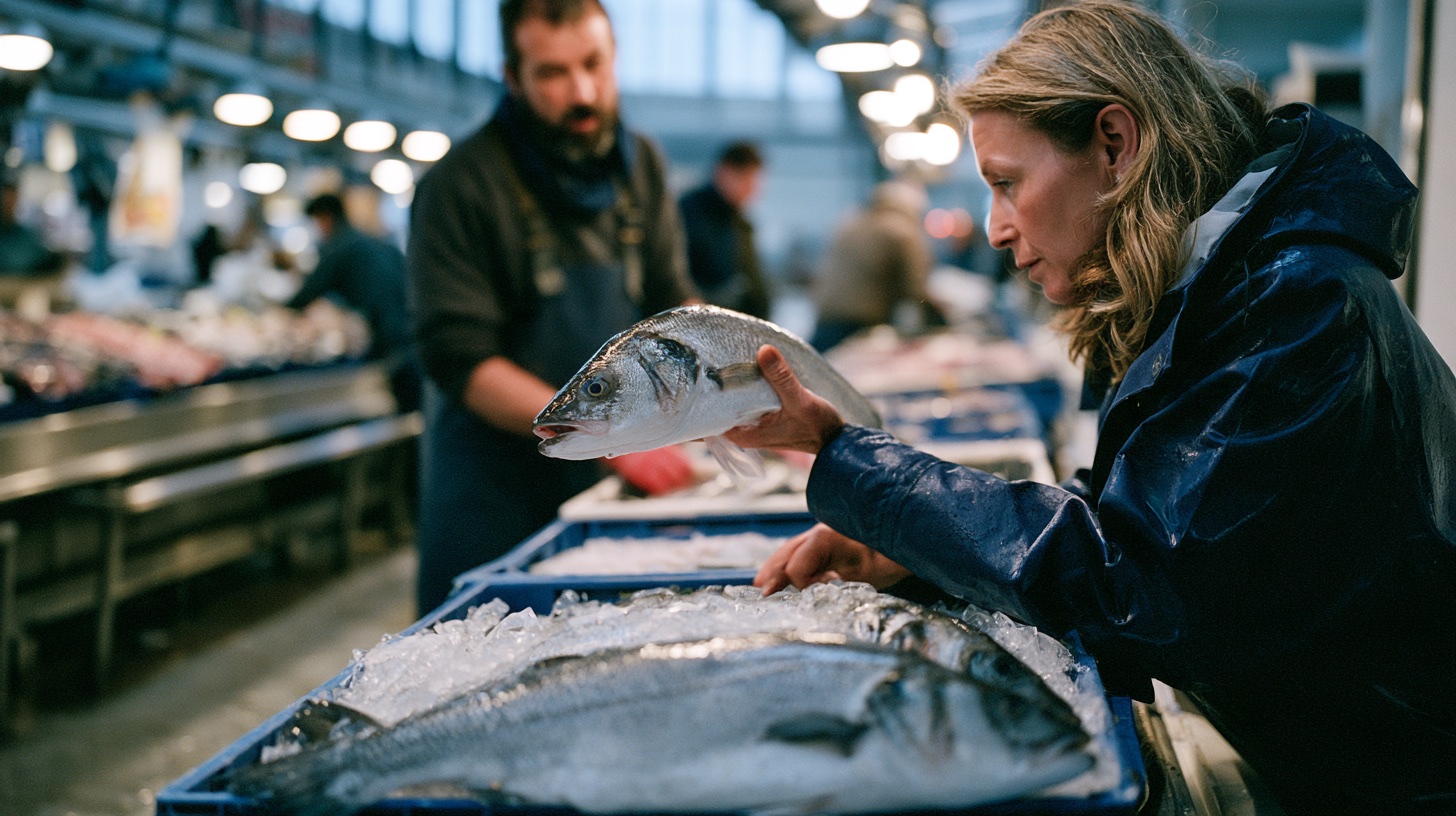
AI that knows seafood.
Fresh fish sells in days, not weeks. Every box needs the right species, size, catch area and paper, and the price moves while the truck is on the ferry. We bring what we learned on a meat desk to the people who trade fish.
Eight days, from the sea to the plate.
A fish is caught, or harvested from a farm, and the clock starts. It is graded, packed on ice and labelled with its species, catch area and lot. It crosses a border, often a sea, at the right temperature. And every day it waits, it is worth a little less. There is no freezer that buys you back a fresh fillet.
- Caught or harvestedOn ice within the hour.
- Graded and packedSized, boxed, labelled with species, area and lot.
- On the truckOften a ferry too. At 0–2 °C the whole way.
- At the wholesalerSplit into smaller drops.
- At the restaurantOr on the counter.
- Shelf life endsWhatever is left is a loss.
Fresh seafood is sold against the clock. Every hour of paperwork is an hour less to sell it.
What weighs on a seafood business.
Different from meat in the details, the same in the hurry.
- 01Shelf life
Days, not weeks. The fish that waits for an answer loses value by the hour.
See the screen - 02Catch papers
Catch certificates, species and area on every box, and the rules change by destination.
See the screen - 03Sizes
300–400, 400–600, 600–800. One size off and it is a different product.
See the screen - 04Prices by the hour
Auctions, landings and weather move the price before the truck arrives.
See the screen - 05Ferries and borders
A missed sailing or a wrong paper costs a day the fish does not have.
See the screen
What changes for seafood.
The same five changes, in the words of the fish trade.
- What changes · 02Sold before the date
Lots with a day or two left flagged in the morning, with the buyers who took that species and size before.
Read how - What changes · 03Papers right first time
Catch certificates, box labels and health certificates filled from the order and checked.
Read how - What changes · 05Every spec understood
Lubina, bar and Wolfsbarsch, 400–600 g, matched to one spec.
Read how - What changes · 01Orders in, not typed
Orders from restaurants and wholesalers, in their languages, typed in before dawn.
Read how - What changes · 04Paid on time
The restaurant group that is starting to pay late, flagged before the next delivery.
Read how
Everyone between the boat and the plate.
We began with meat. The orders, specs, papers and payments of the fish trade are the same work, faster.
What carries over
- Orders read from email and WhatsApp
- Every name for a product matched to one spec
- Papers filled once and checked
- Credit checked before the truck
What is new for seafood
- Catch certificates and catch areas
- Sizes by grams, not cuts
- Shelf life in days
- Ferries and auctions in the plan
Stories from meat, where it started
- Our own trading deskBefore we built tools for anyone else, we built them for ourselves.Read the story
- A pork processor in PolandBuyers ordering in four languages, and an office that started every day typing.Read the story
- A trading house selling to ItalyGood buyers, slow paperwork, and money that arrived a month late.Read the story
Bring one week of your seafood business.
Thirty minutes on a call. We will show you where the hours go between the catch and the buyer, and what we would change first.