AI that knows dry goods.
Dry goods keep for months, so the work moves into the paper: long contracts, lab results for every lot, and a vessel that may or may not sail on time. We bring what we learned on a meat desk to the people who trade grain, seeds, nuts and oils.
The contract decides the price.
A contract is signed in spring for a crop that is not harvested yet. When the seeds finally ship, every lot is tested: moisture, admixture, aflatoxin, size. Each result is checked against the contract, and each number over the limit is money, if someone reads the lab report against the right clause before the invoice goes out.
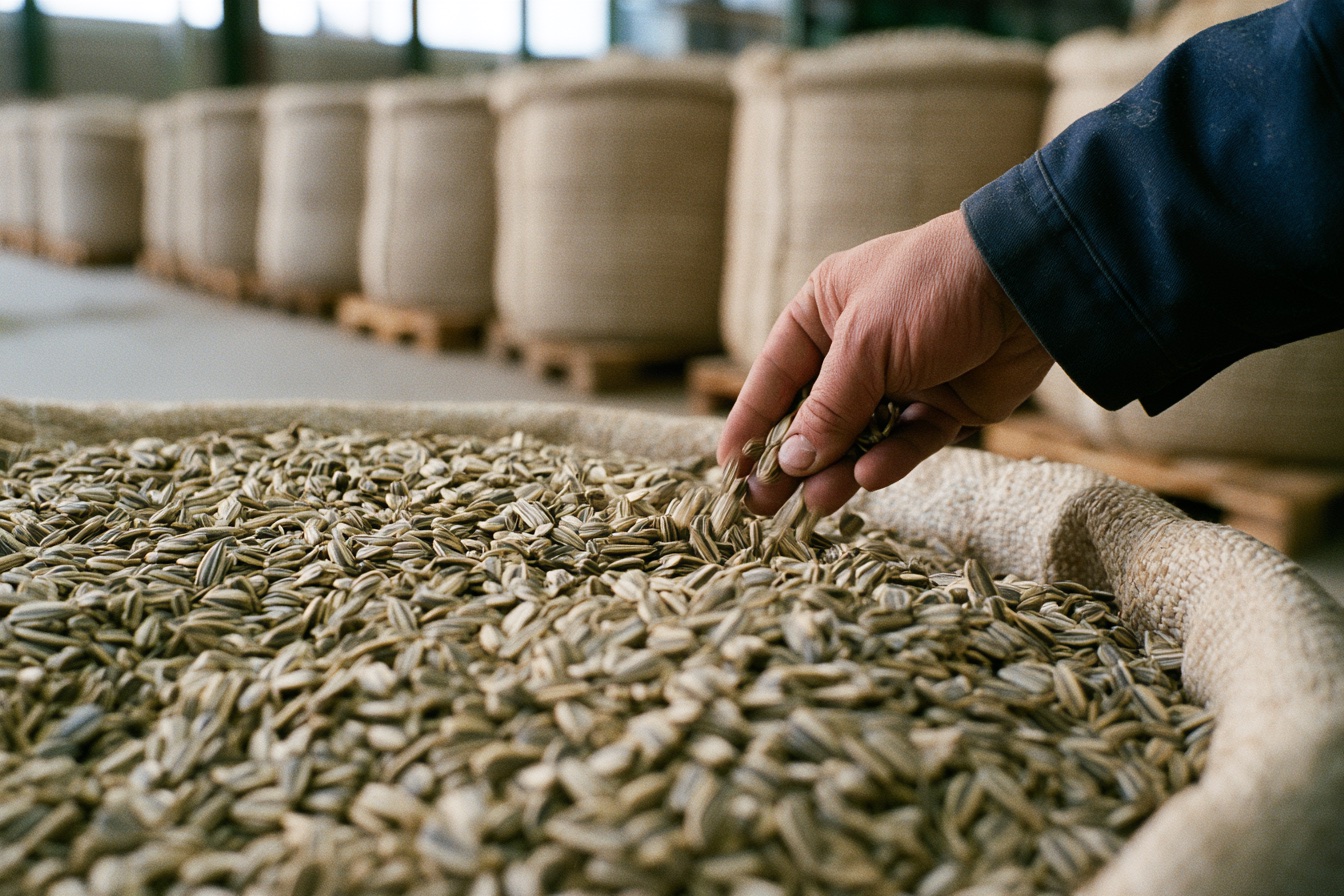
Striped sunflower seeds · contract C-0418 · three lots, one truck each
- TestContractSF-2205SF-2206SF-2207
- Moisture≤ 9.0%8.6%8.8%9.4%
- Admixture≤ 1.0%0.6%0.8%0.7%
- Aflatoxin B1≤ 2.0 µg/kg0.91.11.0
- Size≤ 22/6422/6422/6422/64
SF-2207 is 0.4% over. The contract takes 1% off for every 0.1%: a 4% discount, if someone notices in time.
In dry goods, the margin is in the small print. Somebody has to read it, every time.
What changes for dry goods.
The same changes, in the words of the dry goods trade.
- What changes · 03Papers right first time
Lab reports read against the contract, and the claim drafted before the invoice goes out.
Read how - What changes · 05Every spec understood
Calibre, moisture and grade in every buyer’s terms, matched to one spec.
Read how - What changes · 04Paid on time
Payment dates and letters of credit followed across long contracts.
Read how - What changes · 01Orders in, not typed
Call-offs against a contract, read from email and typed in.
Read how - What changes · 06Hours back, measured
Where the office loses its week between the vessel, the warehouse and the lab.
Read how
What weighs on a dry goods business.
Slow product, fast paper.
- 01Long contracts
Signed months ahead, with clauses for every test and every delay.
See the screen - 02Lab results
Every lot tested, every result checked against the contract by hand.
See the screen - 03Moisture and quality
Half a percent over, and the price changes, if anyone notices.
See the screen - 04Vessel delays
A ship that sails late moves every truck, payment and warehouse slot after it.
See the screen - 05Prices by the season
The crop, the weather and the exchange rate, all moving at once.
See the screen
Everyone between the field and the factory.
We began with meat. Specs, papers, credit and the small print of every contract are the same work in dry goods.
What carries over
- Specs matched across languages
- Papers filled once and checked
- Credit and payments followed
- Stock and lots in one place
What is new for dry goods
- Long contracts and their clauses
- Lab results for every lot
- Vessels and bulk
- Season-long prices
Stories from meat, where it started
- Our own trading deskBefore we built tools for anyone else, we built them for ourselves.Read the story
- A pork processor in PolandBuyers ordering in four languages, and an office that started every day typing.Read the story
- A trading house selling to ItalyGood buyers, slow paperwork, and money that arrived a month late.Read the story
Bring one contract and its lab reports.
Thirty minutes on a call. We will show you what the small print is worth, lot by lot.